Securing professional pest control services Sioux Falls properties require stops structural damage and protects indoor air quality before infestations disrupt daily living. A local pest control services company near me addresses high-risk pest intrusion points caused by drastic seasonal freeze-thaw cycles along the Big Sioux River basin.
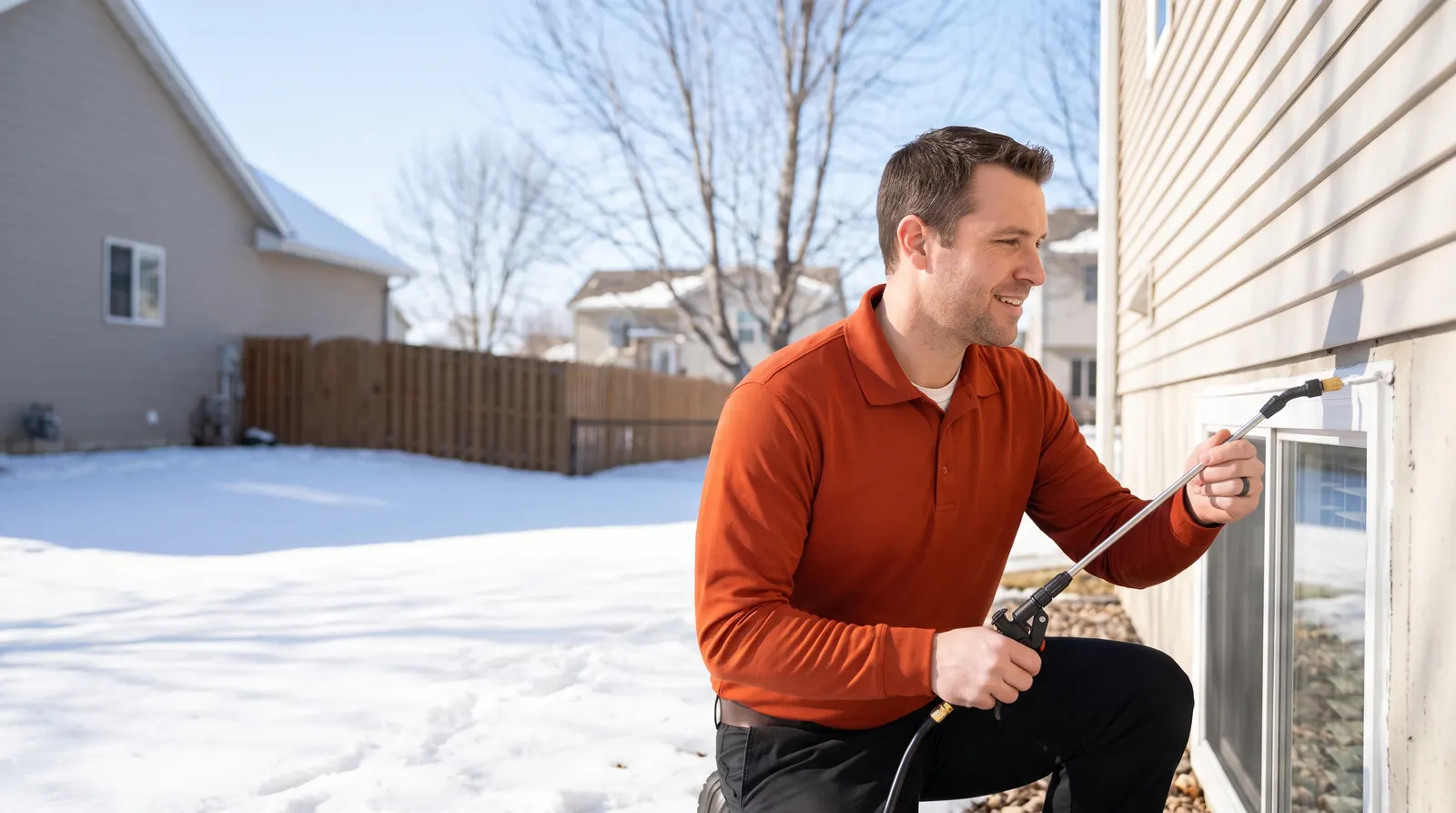
A pest control services company in Sioux Falls is an environmental health provider that eliminates insect and rodent populations through mechanical exclusion, habitat modification, and targeted exterior barrier applications.
Every service reflects the same meticulous attention to detail, whether it's a single job or a larger pest control services project across Sioux Falls.
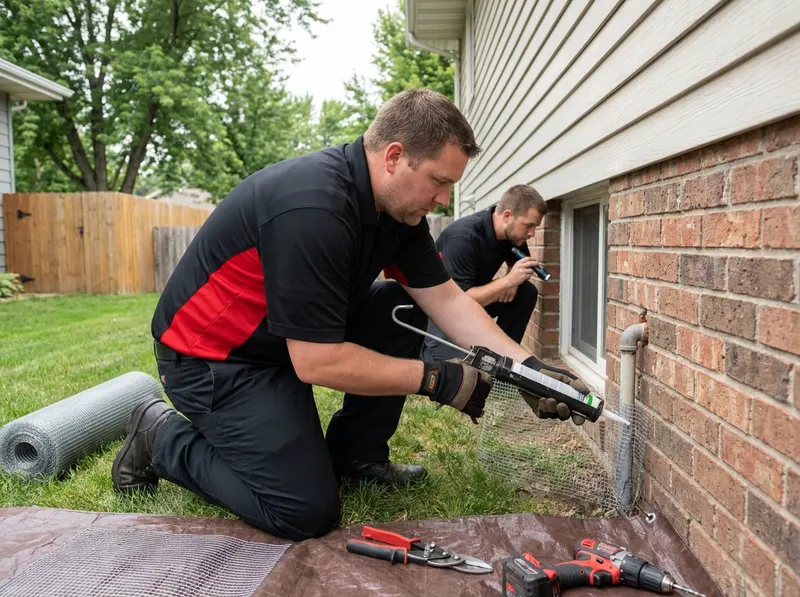
Residential rodent exclusion seals exterior entry gaps larger than one-quarter inch using 16-gauge galvanized steel hardware cloth, elastomeric silicone sealants, and custom-formed metal kick plates along foundation perimeters. Technicians systematically inspect mudsill plates, rim joists, crawlspace vent screens, air conditioning conduit chases, natural gas pipe penetrations, and overhead garage door bottom astragals to close structural pathways exploited by deer mice, white-footed mice, and Norway rats. Tamper-resistant, anchored exterior monitoring stations contain low-toxicity, non-volatile bait blocks formulated to withstand moisture, secured with internal metal locking rods to protect domestic pets, non-target backyard squirrels, and local wildlife. Indoor living spaces receive targeted wooden-base snap trap arrays enclosed inside child-proof plastic tunnel stations stationed strictly inside mechanical closets, drop ceilings, and unfinished basement corners. Technicians establish clear perimeter sanitation guidelines, identifying overgrown vegetation, unsecured pet food stores, and stacked cordwood within twenty feet of exterior siding that harbor outdoor rodent nesting sites.
Get a quote →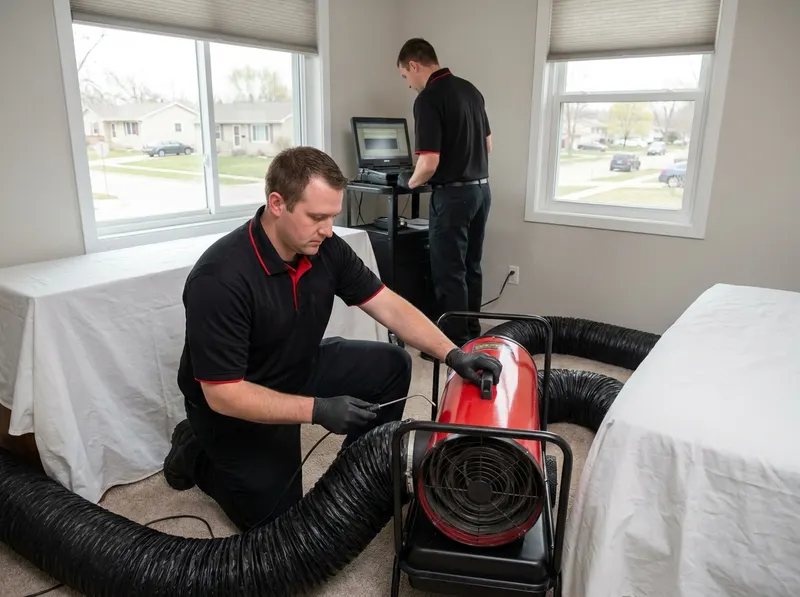
Bed bug thermal remediation utilizes specialized electric convective industrial heaters and calibrated high-static axial air movers to raise structural temperatures inside infested bedrooms to a lethal sustained range between 122 and 135 degrees Fahrenheit. Industrial heating units circulate dry thermal energy evenly across mattress seams, box spring coils, hollow headboards, wooden baseboards, carpet tack strips, electrical outlet cavities, and interior drywall voids, completely dehydrating and destroying nymphs, adult bed bugs, and hidden eggs during a single multi-hour exposure window. Real-time temperature logs captured via remote wireless thermodynamic sensors verify uniform heat penetration through thick textiles and furniture cores without warping residential drywall or activating modern fire suppression sprinkler heads. This chemical-free protocol eliminates the requirement to discard high-value furniture sets, mattresses, or clothing, leaving zero toxic surface residues or persistent vapor phases on household bedding, children's toys, or family fabrics.
Get a quote →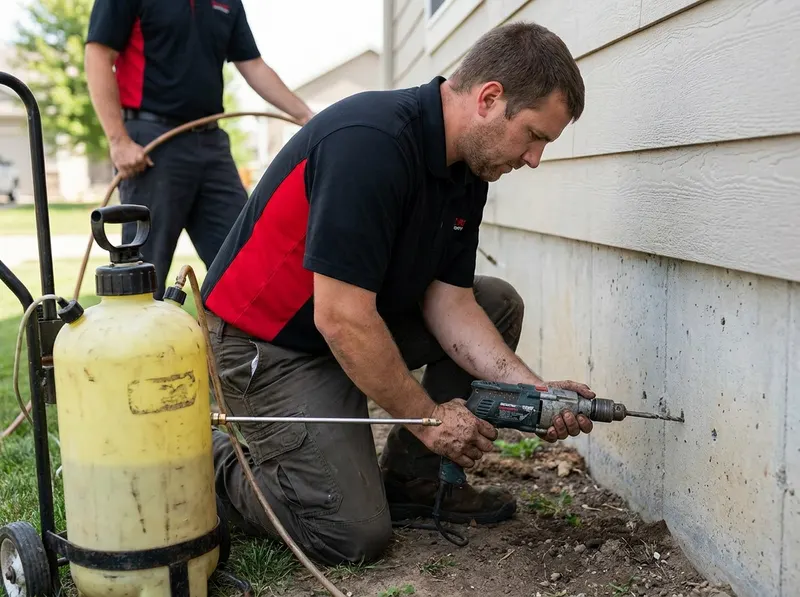
Subterranean termite defense involves establishing an uninterrupted exterior liquid soil trench barrier around structural foundation footings using advanced non-repellent termiticides, supplemented by in-ground cellulose monitoring stations placed at ten-to-fifteen-foot intervals around building driplines. Technicians excavate a six-inch-deep by six-inch-wide trench along perimeter concrete, block, or fieldstone foundations, rodding low-odor termiticide liquid deep into subterranean subsoils where native termites maintain active underground foraging tubes. For structures built over slab-on-grade concrete or finished daylight basements, precision slab drilling through hidden expansion joints delivers protective termiticide barriers directly beneath vulnerable structural cold joints and interior plumbing dropouts. This transfer-active formulation allows unsuspecting subterranean worker termites to track the active ingredient directly back to underground colonial nurseries, systematically eliminating subterranean queens without requiring the disruption of interior finished drywall or structural subflooring.
Get a quote →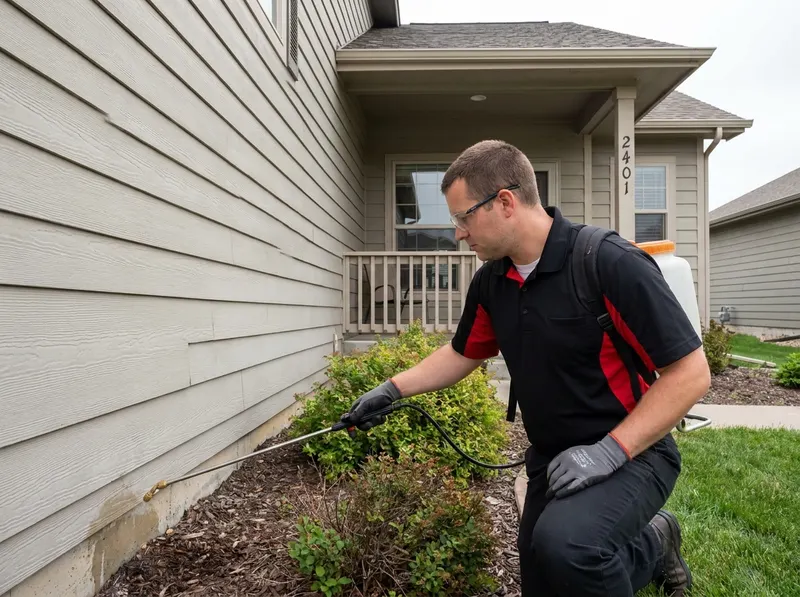
Perimeter defense treatments establish a continuous three-foot vertical and three-foot horizontal microencapsulated protective barrier around exterior structural foundations, daylight window wells, patio stone transitions, and covered porch landings. This targeted exterior defense eliminates aggressive trailing odorous house ants, moisture-loving pavement ants, and hunting wolf spiders before they penetrate exterior weatherstripping, window screen tracks, or foundation sill gaps. Advanced microencapsulated liquid formulations feature microscopic polymeric spheres that bond to rough concrete, brick masonry, and siding surfaces, withstanding heavy rainstorms and intense solar UV degradation without leaching into residential garden soil or lawn beds. Once fully dried within ninety minutes of application, the protective residual barrier remains completely safe for children, dogs, and indoor cats, delivering continuous non-repellent contact extermination that neutralizes foraging arthropods before they establish indoor overwintering colonies.
Get a quote →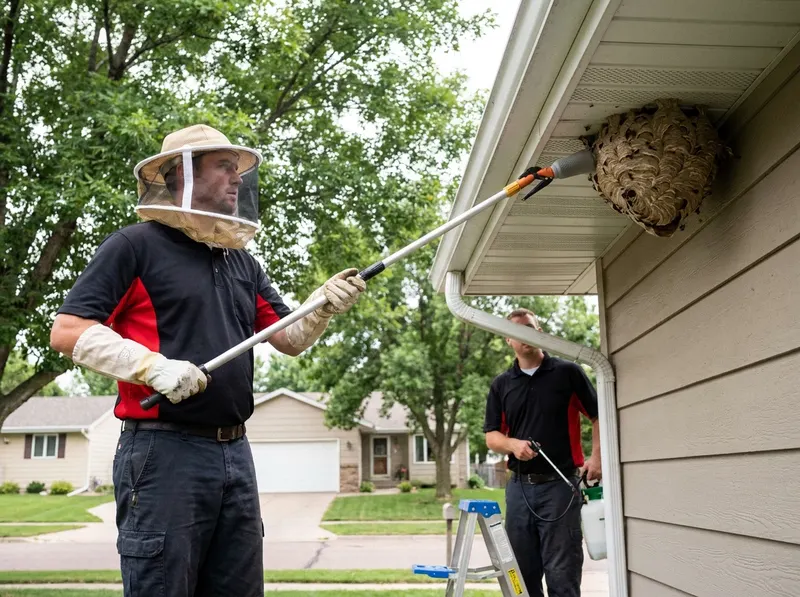
Targeted stinging insect removal neutralizes and physically extracts paper wasp combs, aerial yellowjacket assemblies, and bald-faced hornet nests situated under high exterior eaves, roof fascia boards, deck railings, and structural soffit vents. Technicians employ specialized telescoping carbon-fiber delivery wands and quick-knockdown freeze formulations to neutralize defensive worker colonies safely from ground level without generating airborne pesticide drift into HVAC return air intakes or open neighbor windows. Once all active stinging insect activity is completely suppressed, technicians mechanically scrape away nest anchoring pads, seal accessible soffit openings with durable wire screening, and apply specialized micro-crystalline repellent dusts directly to residual attachment surfaces to prevent secondary queens from constructing substitute nests during late summer foraging peaks. Ground-nesting yellowjacket burrows located inside lawn turf, landscape mulch beds, or rock borders receive deep subterranean dust injection that collapses subterranean cavity networks.
Get a quote →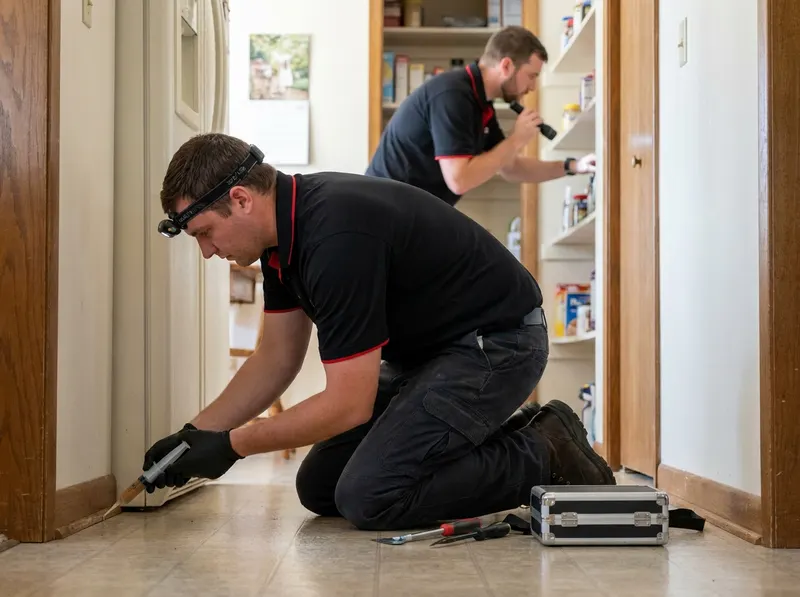
Cockroach cleanout procedures halt rapid German, American, and oriental cockroach infestations through targeted insect growth regulators (IGRs) combined with low-toxicity abamectin and indoxacarb matrix gel placements inserted into hidden structural gaps. Certified technicians dispense micro-bead gel deposits directly into structural cabinet hinge mortises, hollow metal table legs, refrigerator motor compressor housings, dishwasher insulation borders, and plumbing wall chase apertures where roaches harbor away from daylight. Non-repellent juvenile hormone mimics interrupt the molting cycle of emerging nymph populations, rendering adult roaches sterile without aerosolizing volatile organic chemicals across household food preparation counters or kitchen dishware. Technicians position numbered, date-stamped sticky insect monitoring stations within high-moisture utility zones, tracking weekly drop-off metrics to ensure total egg-case (ootheca) suppression before declaring residential living spaces completely pest-free.
Get a quote →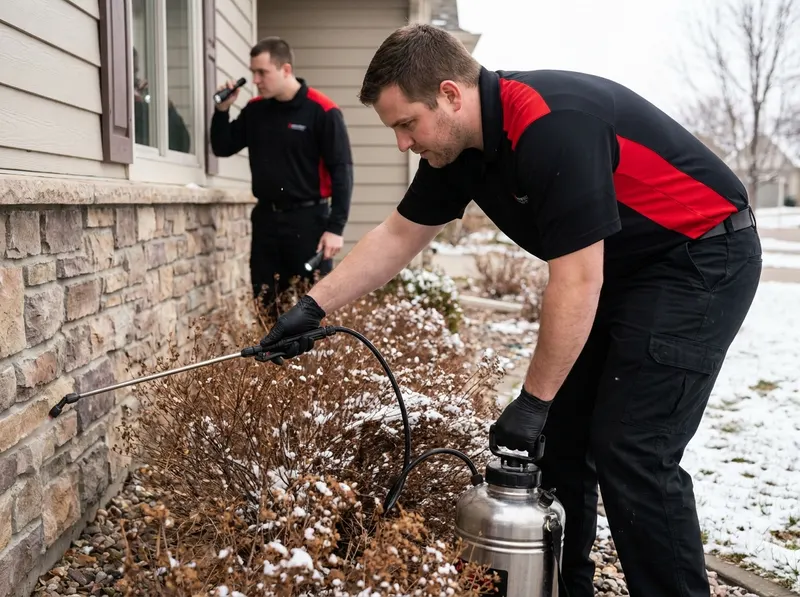
Overwintering pest treatments focus along south- and west-facing exterior siding, fascia transitions, gable vents, and metal window surrounds to intercept massive aggregations of boxelder bugs, brown marmorated stink bugs, and multicolored Asian lady beetles. Applied in late August and September before declining autumn ambient temperatures prompt swarms to crawl behind lap siding, the specialized microencapsulated surface shield neutralizes congregating adult insects on contact before they reach interior insulation bats or window casings. Technicians apply focused residual applications along roof valleys, chimney flashings, and gutter backings, creating an invisible hostile surface that halts the invasive pest entry that leads to mid-winter indoor swarm emergences around indoor ceiling light fixtures. Complementary mechanical sealing around exterior light fixtures and plumbing flues prevents cold fall drafts from drawing persistent overwintering pests into finished attic spaces.
Get a quote →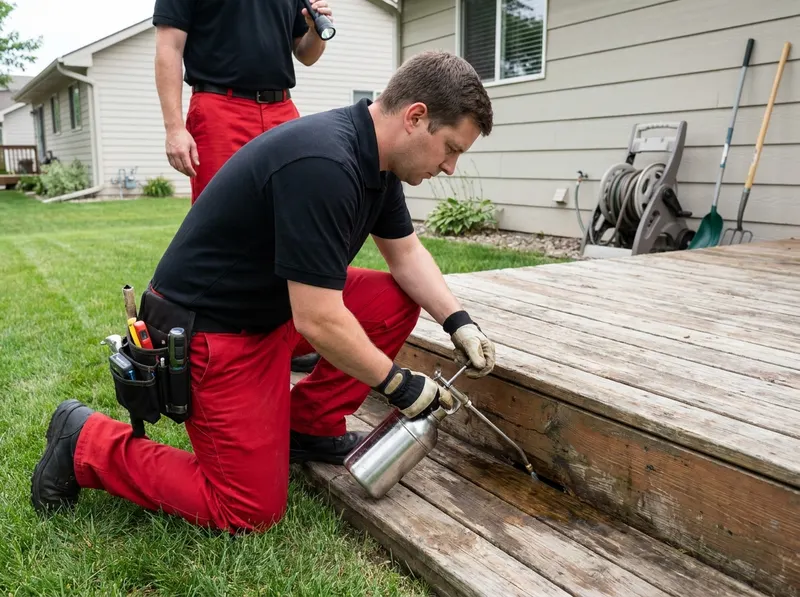
Carpenter ant management focuses on locating and neutralizing parent and satellite colonies boring structural galleries inside water-damaged wall studs, window headers, bathroom subfloors, and roof eaves. Rather than simply spraying worker ants trailing across kitchen floors, technicians perform thorough moisture mapping using thermal imaging and non-invasive moisture meters to discover hidden structural rot zones and active nesting galleries. Treatment combines exterior foundation non-repellent transfer barriers, perimeter perimeter tree-branch pruning recommendations to eliminate structural bridges, and interior void injection of dry micro-dust formulations directly into hollow framing lumber. Foraging worker ants carry low-toxicity active ingredients into the heart of the colony, eliminating satellite queens and eradicating excavation activity before wood timbers suffer irreversible structural strength loss.
Get a quote →You get a firm, itemized quote for your pest control services before any work begins, no surprises, no pressure.
Careful prep, tidy work, and a full cleanup when we are done. We treat your home and belongings like our own.
The same trusted, background-checked team from the first call to the final check.
Selecting the right pest intervention depends on the specific biological vulnerability of the structure, the active pest species, and seasonal climatic stressors across Minnehaha and Lincoln counties. If a home exhibits scratching sounds inside wall voids, crawlspaces, or attic insulation, choose targeted mechanical rodent exclusion rather than general perimeter barrier sprays. Mechanical exclusion physically seals entry points larger than one-quarter inch using heavy-gauge copper mesh, 16-gauge galvanized steel hardware cloth, and metal flashing along foundation sills, whereas perimeter chemical sprays only deter crawling insects along foundation perimeters.
The trade-off is that structural exclusion requires detailed exterior diagnostic time and a higher initial on-site minimum investment, but it prevents the recurring interior baiting visits required when relying strictly on exterior traps. For crawling summer pests such as wolf spiders, yellow sac spiders, pavement ants, and earwigs, an exterior microencapsulated perimeter defense applied along foundation footings, door thresholds, and daylight window wells stops pest movement before insects establish indoor nesting zones. If bed bugs appear in sleeping areas or upholstered furniture, whole-room convective thermal remediation is necessary instead of standard spot liquid treatments; thermal remediation eliminates heat-tolerant eggs and deep-harboring nymphs in a single day, avoiding the multi-week chemical re-treatment cycles that risk ongoing family disruption and chemical sensitization.
When wood-destroying subterranean termites invade damp foundation timbers near river drainage basins, choose non-repellent liquid trenching or targeted monitoring bait arrays over surface wood sprays; non-repellent liquid trenching introduces a continuous soil barrier that foraging workers transfer back to subterranean queens, while topical wood coatings leave hidden subfloor colonies active. For severe stinging insect clusters built under second-story soffits or composite deck frameworks, professional directional aerosol freezing and physical nest extraction provide immediate family safety, whereas consumer grocery-store spray cans risk personal stinging injuries and chemical drift across open patio dining areas. Property owners balancing long-term structural maintenance against single-incident outbreaks achieve the most predictable protection by scheduling exterior seasonal barrier seals in mid-spring and late summer rather than attempting reactive emergency treatments after pests migrate into indoor wall cavities.
Every project gets a firm, written price after a free on-site visit. Ranges below for orientation.
Tell us about your pest control services job and we'll send a clear, written quote, usually the same day. Or just call and talk to a real Sioux Falls pro.
(605) 401-2527
Properties throughout Minnehaha County and Lincoln County encounter distinct pest pressures shaped by regional hydrology, historic construction methods, and rapid municipal expansion along the Big Sioux River basin. In historic neighborhoods like the Cathedral Historic District, All Saints, and Pettigrew Heights, residential structures built with century-old Sioux quartzite, limestone, and soft mortar foundations experience severe autumn rodent ingress. As ambient temperatures drop below freezing in late October and November, deer mice and house mice migrate out of riverbank greenbelts and mature neighborhood shade canopies, finding unsealed entry points along aged sill plates, coal chute doors, and dry stone foundation gaps. The proximity of mature tree lines near Terrace Park, the Japanese Gardens, and McKennan Park creates elevated moisture levels that support heavy satellite carpenter ant colonies and moisture-loving wood-boring pests that exploit soft timber framing. Across newer southern and eastern subdivisions surrounding Harmodon Park, Prairie Tree, and Silver Valley, extensive grading across dense glacial till and clay soils displaces native populations of wolf spiders, field crickets, and odorous house ants. These pests routinely penetrate newer homes through slab-on-grade foundation expansions, unfinished daylight basement window wells, and plumbing utility penetrations around sump pump discharge lines. Agricultural fields bordering Sioux Falls along 57th Street, 85th Street, and Veterans Parkway intensify seasonal insect swarms; warm south-facing exterior walls absorb sunlight in September, attracting tens of thousands of boxelder bugs, western conifer seed bugs, and brown marmorated stink bugs seeking shelter before winter. Cold regional winters with temperatures routinely falling beneath zero degrees Fahrenheit force active pests deep into interior subfloors, plumbing chases, and central heating ductwork, rendering superficial consumer DIY sprays ineffective and demanding precise physical barrier exclusion combined with professional sub-slab and crawlspace treatments.
Free estimates for Sioux Falls & the surrounding area.
 Solvian Bug Removal