Commercial food prep environments along 41st Street, Minnesota Avenue, and downtown Sioux Falls face intense biological pressure from moisture, constant organic residue, and thermal pockets generated by commercial…
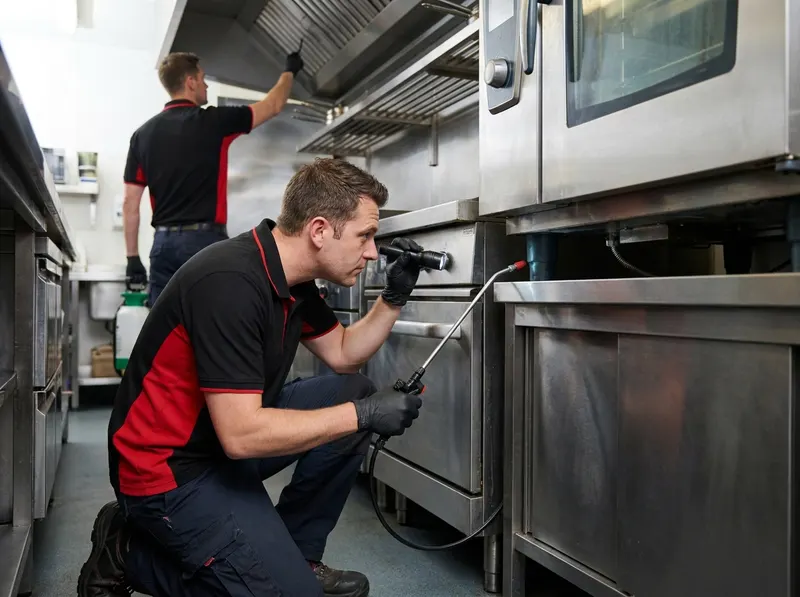
Commercial food prep environments along 41st Street, Minnesota Avenue, and downtown Sioux Falls face intense biological pressure from moisture, constant organic residue, and thermal pockets generated by commercial refrigeration compressors. Standard perimeter pesticide sprays fail in these settings because steam washing and nightly floor scrubbing remove chemical barriers within hours, while broadcast toxins present contamination hazards near food-contact surfaces. Professional facility defense relies on mechanical exclusion, high-heat sanitation reviews, targeted non-repellent micro-encapsulated baits, and insect growth regulators placed directly into dry wall voids, motor housings, and floor drain assemblies where insects aggregate.
Older commercial infrastructure throughout the Cathedral Historic District, Pettigrew Heights, and Riverview often features limestone foundations, exposed utility conduits, and aging subfloors that serve as direct travel corridors for rodents seeking warmth during South Dakota freeze cycles. Facilities in newer commercial zones like Harmodon or Prairie Tree experience different vectors, primarily pallet-borne introductions of German cockroaches or Indian meal moths via regional supply trucks. Addressing these issues requires systematic structural sealing using metal mesh, copper wire cloth, and silicone-based void sealants around floor sinks, dishwashing stations, and mop basins rather than relying on hardware store traps that only address surface foraging.
Decision guidance depends on operational layout: a 1,200-square-foot quick-service kitchen in All Saints requires intensive drain biofilm bioremediation and nightly bait matrix rotation, whereas a 25,000-square-foot dry goods warehouse near the Denny Sanford PREMIER Center prioritizes automated perimeter multi-catch rodent stations and dock door weather-seal repairs. The trade-off centers on upfront mechanical proofing versus ongoing chemical dependence; physical exclusion permanently removes pest harboring zones but requires operational maintenance adjustments around sanitation schedules. Routine service operates without long-term automatic-renewal mandates, allowing facilities to schedule bio-rational treatments matched directly to local health audit requirements.
Every job gets a firm, written price after a free on-site visit.
Tell us about your commercial kitchen and facility pest defense job in Sioux Falls and we'll send a clear, written quote, usually the same day.
 Solvian Bug Removal